
Exit Planning Isn’t About Selling, It’s About Running a Better Business Today
Most business owners hear the phrase exit planning and immediately think,
“I’m not selling anytime soon" or "This doesn’t apply to me.”
That assumption is exactly why many businesses stay stressful, inefficient, and harder to sell than they should be.
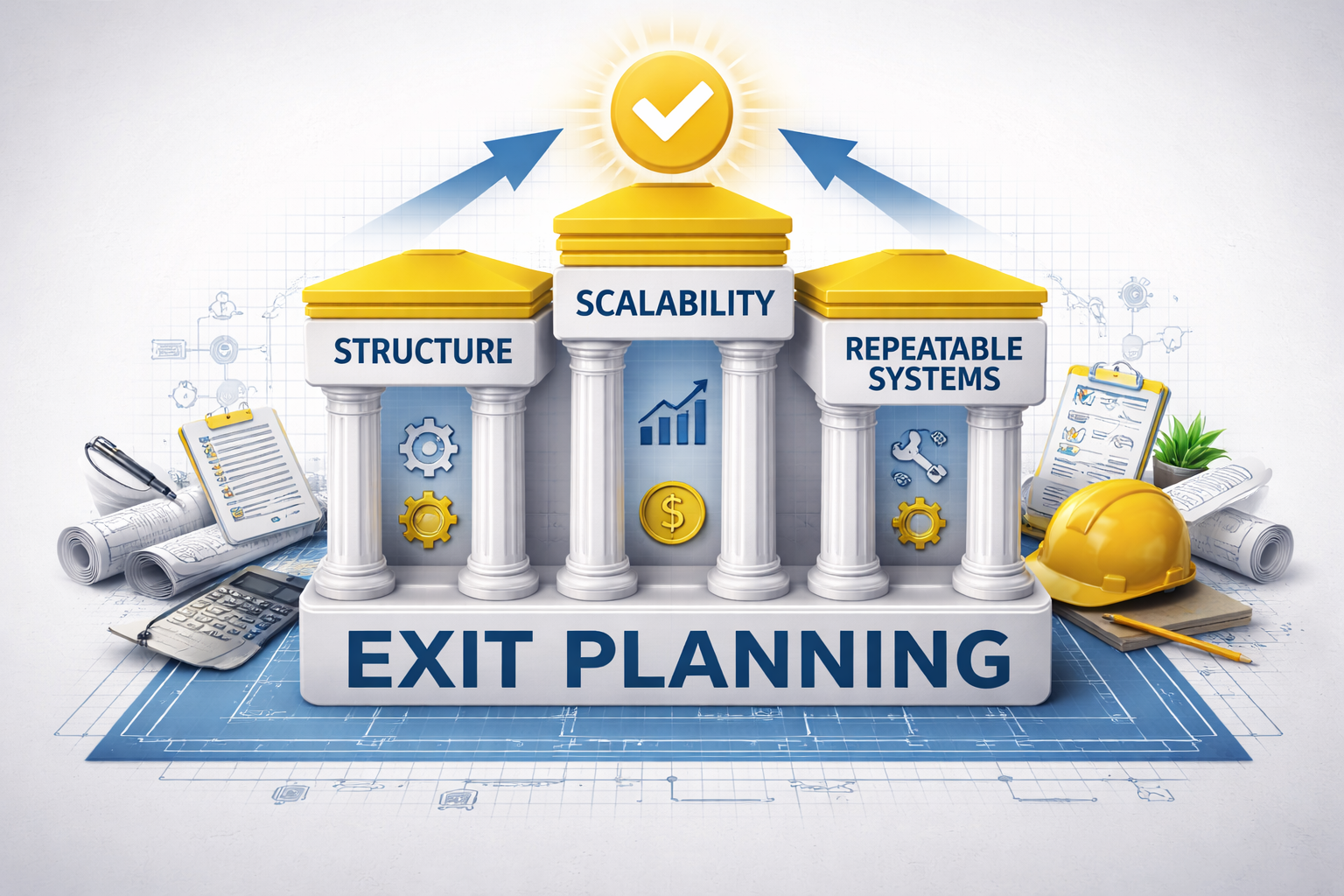
Exit planning isn’t about leaving
It’s about how the business runs while you’re still in it.
At its core, exit planning forces owners to answer important questions:
Can this business operate without me being involved in everything?
Are the financials clean, understandable, and useful for decision making?
Is revenue predictable, or does it feel random month to month?
Are roles, processes, and expectations clearly defined?
These aren’t “sell someday” questions.
They’re today problems that directly impact profit, stress, and growth.
Why exit planning improves profit now
When you prepare a business to be sell ready, you naturally:
eliminate inefficiencies,
tighten pricing and margins,
reduce rework and firefighting,
and make smarter decisions with better data.
Buyers look for businesses that produce consistent results without owner dependence. Ironically, those are also the businesses that are easier and more enjoyable to own.
Less stress, fewer fires
Owner dependence is one of the biggest killers of both business value and owner sanity.
Exit planning focuses on:
documenting repeatable systems,
clarifying roles,
building leadership depth,
and removing the owner as the bottleneck.
The result?
Fewer emergencies. Less decision fatigue. More control with less effort.
Sell ready doesn’t mean for sale
A sell ready business:
runs smoother,
scales easier,
commands stronger offers if and when you sell,
and gives the owner optionality.
You don’t prepare for an exit because you’re leaving tomorrow.
You prepare so you’re never stuck.
Final thought
The best exits don’t start when an owner decides to sell.
They start years earlier when the business is built to operate, perform, and grow without relying on one person.
That’s the real value of exit planning.